NOLA Blue Carbon
Community Project
NOLA Blue Carbon Community Project focuses con eco-diversity, natural ecosystems regeneration, and community resilience on the Lower Ninth Ward.
The project responds to nine objectives created by my studio group, our instructors and me. The objectives divide into three categories: People and Communities, Ecology and Materials, Structures and Engineering.
People and Communities:
· Foster safe, affordable, and welcoming environments that explore opportunities for youth’s social and personal development.
· Shift power back into the hands of communities by addressing oppressive structures, systems, and spaces.
· Incorporation of local forms of knowledge and people-to-land relationships and any domain knowledge/strategies in a culturally and linguistically competent way.
Ecology:
· Foster new habitats and minimize displacement of existing wildlife which supports the growth and stability of local biodiversity.
· Prioritize the ecological wellbeing and biodiversity through mitigating extractivist human practices by shifting importance back to the hands of Natural processes.
· Acquire a thorough understanding of the current local ecosystem of New Orleans through research and science to promote future sustainable building practices.
Materials, Structures and Engineering:
· Incorporate and prioritize the use of local materials that can be safely extracted, used and recycled on-site.
· Design structures that primarily consider local communities, local ecology and local site conditions to guarantee equitable conditions for all ecosystem entities, including vulnerable minorities.
· Encourage the transition from hyper-control water mechanisms to natural water control mechanisms that are feasible from the individual to the community scale.
This project unleashes a socio-political, materials, and urban analysis of NOLA Port Lands earlier in the semester. It is the product of a study prompted by the objectives above and a gained understanding of deltas and the prominent water urbanism that happened and continues to happen in New Orleans. Since my previous studies in NOLA, urban cores and coastal management feels so “far” at the city core. I decided to start my survey around one water issue that was presently tangible and will become more prominent in future years: flood. It is worth noting that other forms of water issues in Nola are under vulnerable “control,” such as water pumping and storm surge defense mechanisms. As a result, others have been present for so long that people had to become used to it, like the case of subsidence.
Studio participants: Abir, Alex, Cheshta, Jay, Juan, Nadisha, Razi, Victoria and myself – Alejandra. Studio Instructors: Catherine Bonier and Aaron Chang.
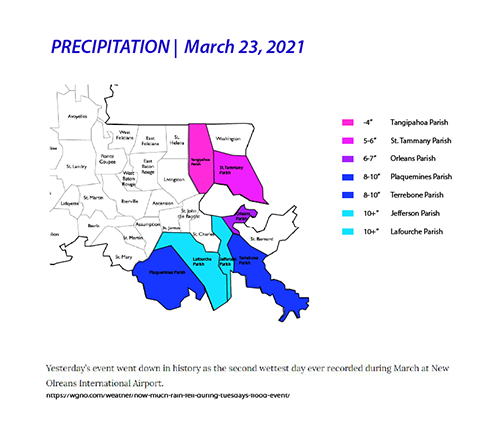
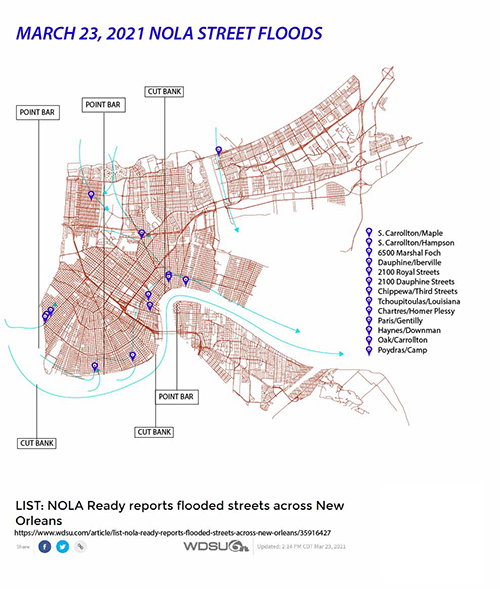
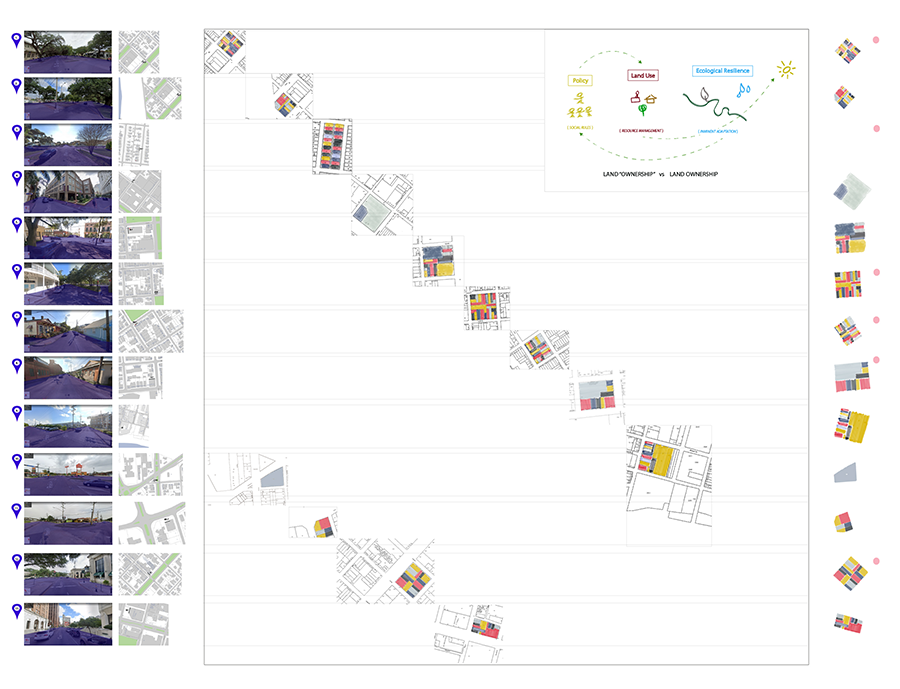
On March 23, 2021, there was a high record of precipitation reported. I found regional information and Nola local information. Flooded streets were reported all over the city but especially around high areas due to surface impermeability and high-water tables. I mapped the recorded locations to analyze further. Based on previous studies and concepts around policy, land use, and ecological resilience. I decided to physically separate land properties from land residency, which led me to ideas around eco-diversity, community resilience and land stewardship.
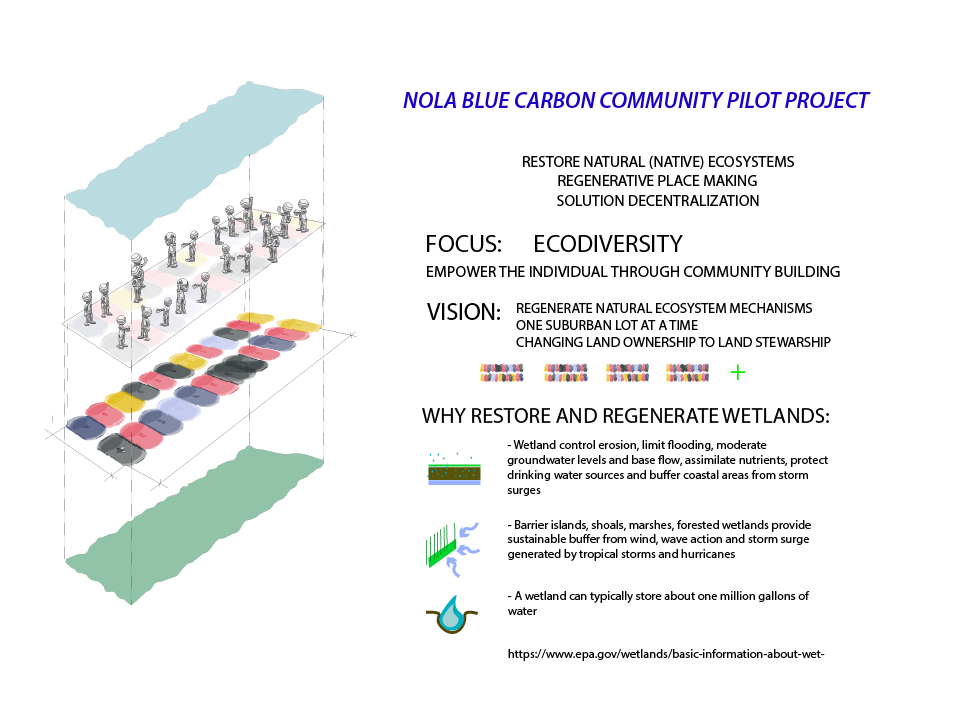
In the past, the NOLA area was a series of swamps, marshes, and wetlands. Nonetheless, colonizing efforts disarmed natural coastal balance and defence mechanisms. Now we know that these biological mechanisms are crucial to Nola and Southern Louisiana community resilience. Wetlands and Swamps control erosion, limit flooding, moderate groundwater levels and base flow, assimilate nutrients, protect drinking water sources, and sustainably buffer coastal areas from storm surges, wind, and wave action from tropical storms and hurricanes. Lastly, wetlands can typically store about one million gallons of water. However, there is underinvestment in wetland restoration efforts in the same way that vulnerable communities are.
NOLA Blue Carbon Community Pilot Project aims to restore natural ecosystems through solution decentralization and regenerative placemaking for the community to progressively create strong and resilient communities that have agency over third space land use. The focus is on eco-diversity, including native plant species, animal species, and social inclusion. Through community integration, leadership, and project inclusion, the project aims to empower the individual through community building. Suburban typologies are prominent in North America and land-rich countries. They are well known to increase social isolation and have giant ecological footprints due to travel distance. This project asks: what if environmental and community resilience efforts are focused on suburban typologies. Can we change land ownership patterns to land stewardship patterns through community enhancement efforts? Can/are suburban residents become land stewards and proactive resilience agents? Will they see economic, social, and personal benefits from communal and land stewardship? I think the answer is yes.
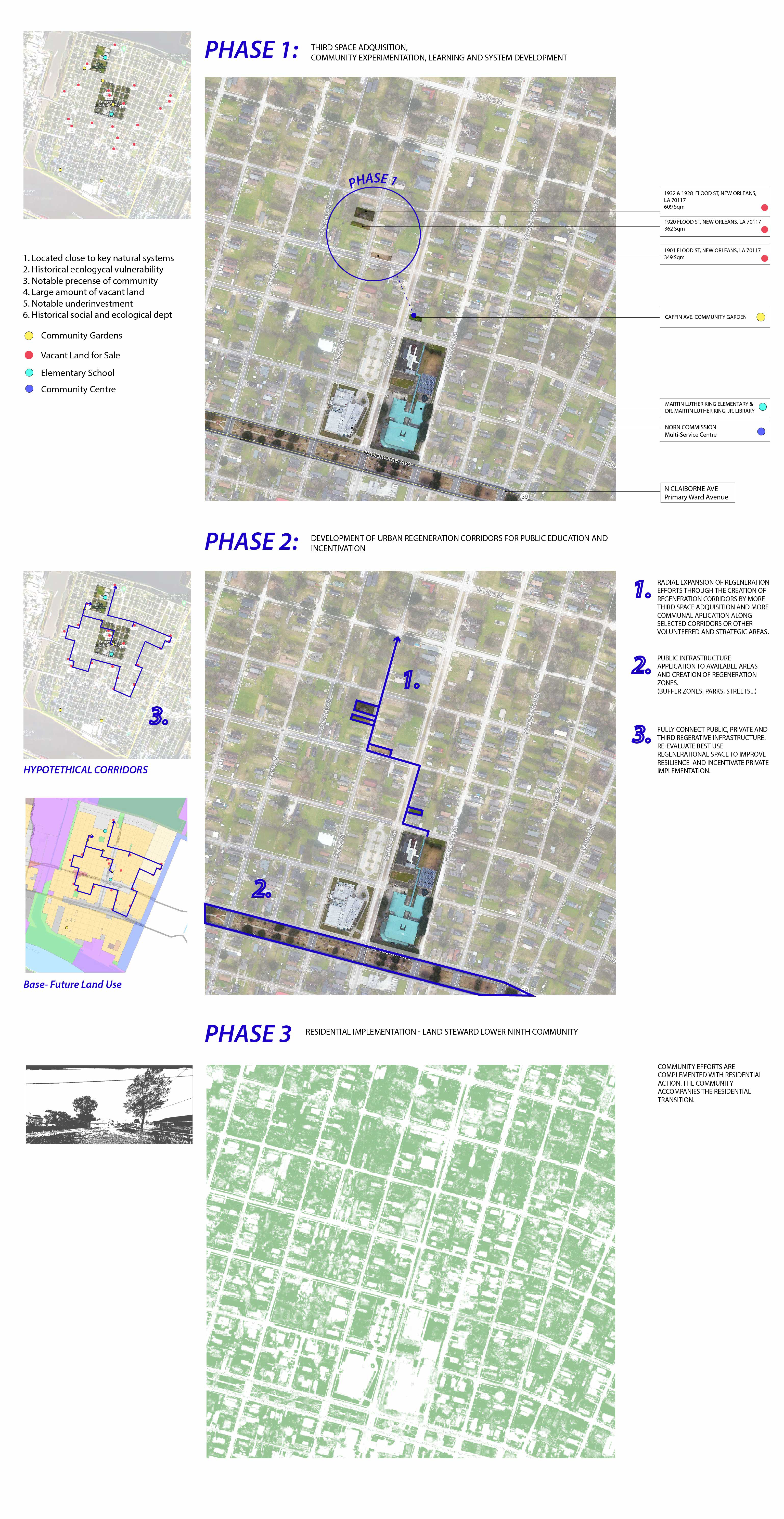
The chosen place for this project development is Lower Ninth Ward for the following reasons: First, it is close to vital natural systems that have been historically vulnerable. Second, it has a strong community garden presence and large amounts of vacant land showing notable underinvestment. Finally, there is a traditional social and ecological dept to this area. I mapped the community gardens, vacant land for sale, educational centers, and community facilities for this analysis.
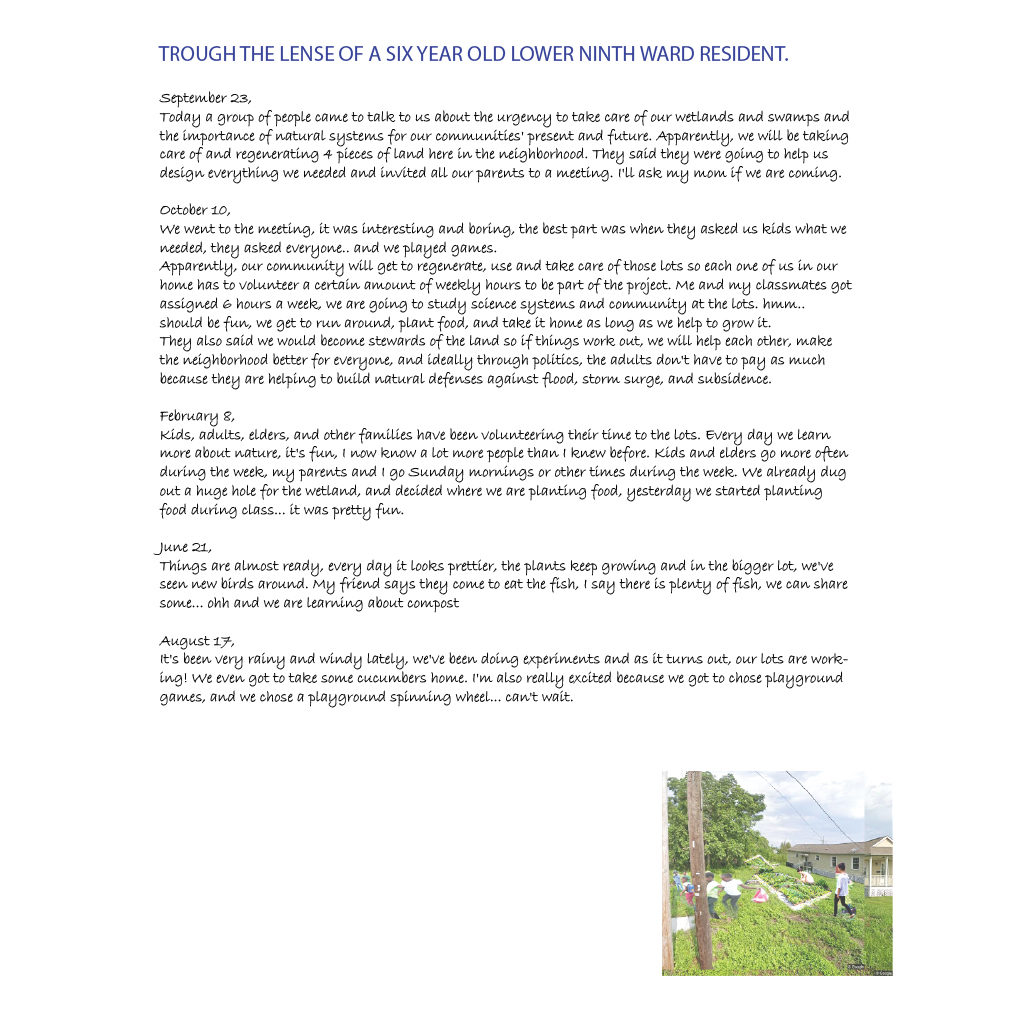
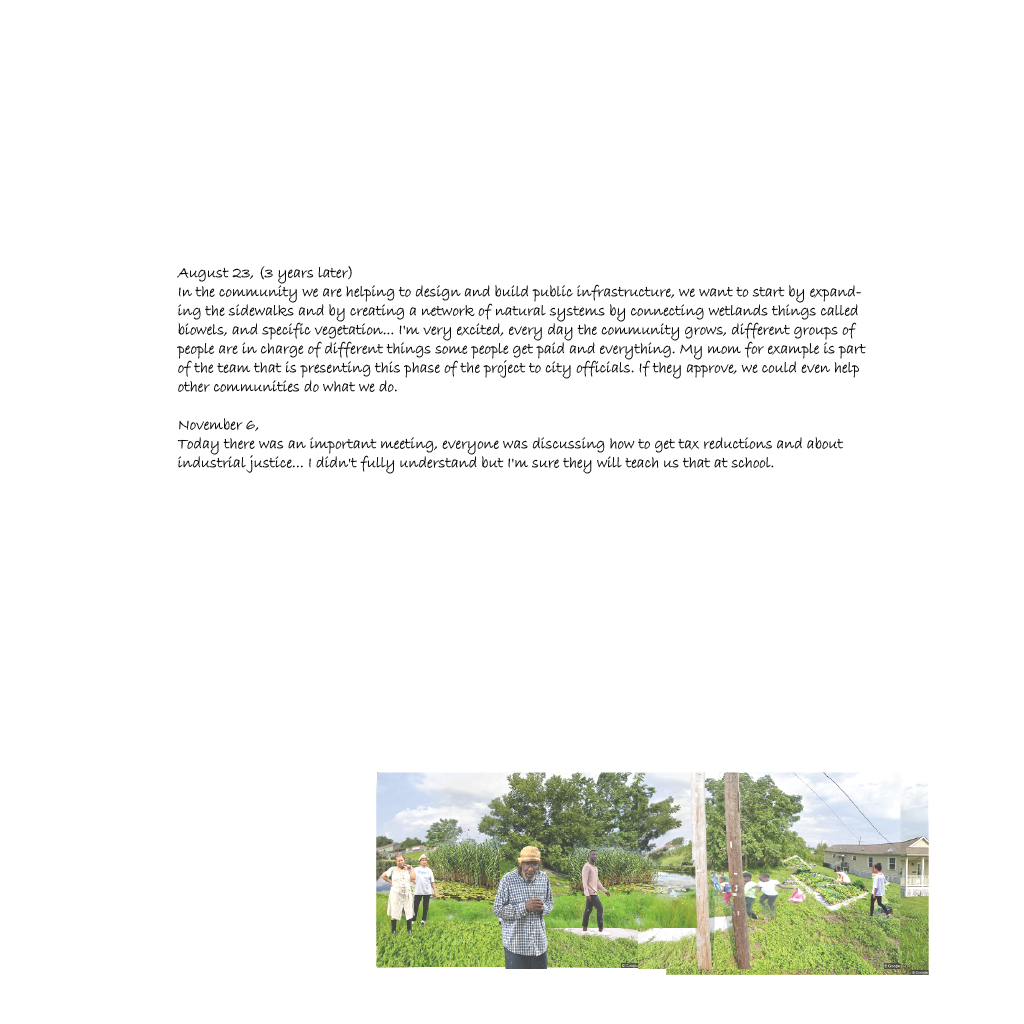
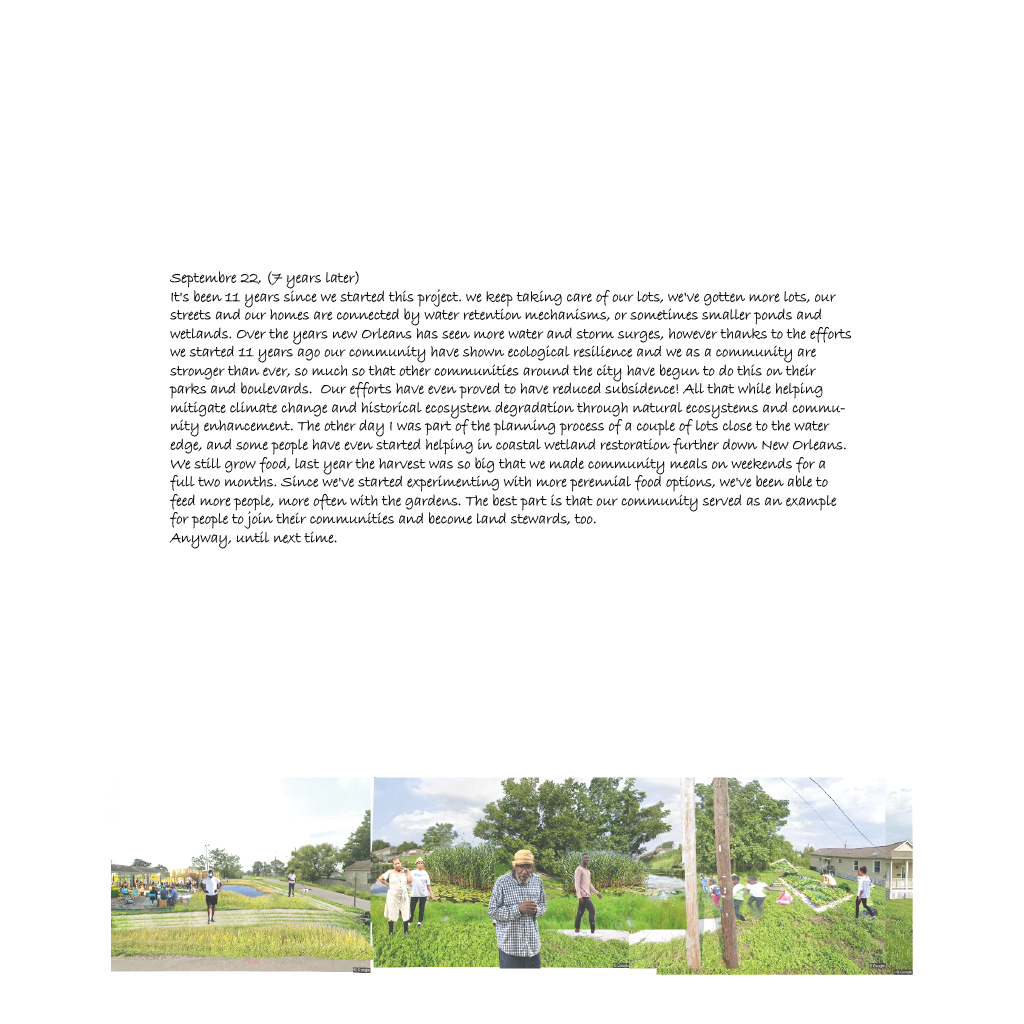
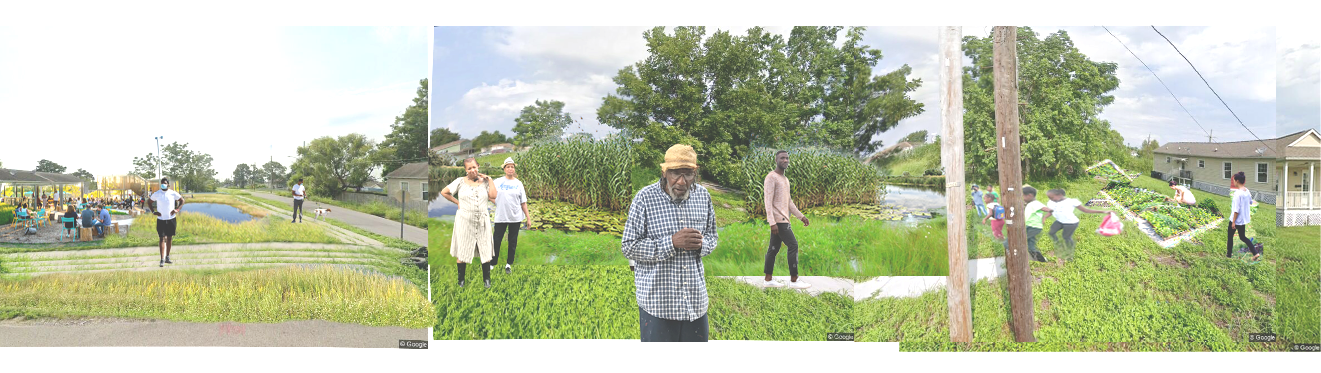
A critical factor in progressive natural regeneration is time. Therefore this project consists of three phases. The First Phase of the project would involve vacant lot acquisition. I decided to focus on four lots due to their proximity to community gathering centers. In the first phase, this vacant land passes to the community as a third space for natural systems restoration, experimentation, learning, and systems development using Biden’s community budget. Once the community has been able to create replicable systems, the second phase will begin. It will be about the development of urban regeneration corridors for public education and incentivization. It will start by radially expanding the regenerative systems and volunteered and selected passages through more third space acquisition and more communal and strategic areas applications. Then public infrastructure application to available regions and creation of regeneration zones like parks, streets, boulevards, and buffer zones would follow. Finally, for the optimal function of these systems, the goal is to connect public, private, and third space regenerative infrastructure and re-evaluate the best use of these regenerative spaces to improve resilience and incentivize more private implementation. Lastly, the Third Phase is about residential implementation incentivization and continuation of previous phases’ efforts. After Phase One and Two, if the community has seen positive results, more integration, and social-economic incentives, the goal is to at a residential scale to increase natural resilience fully.
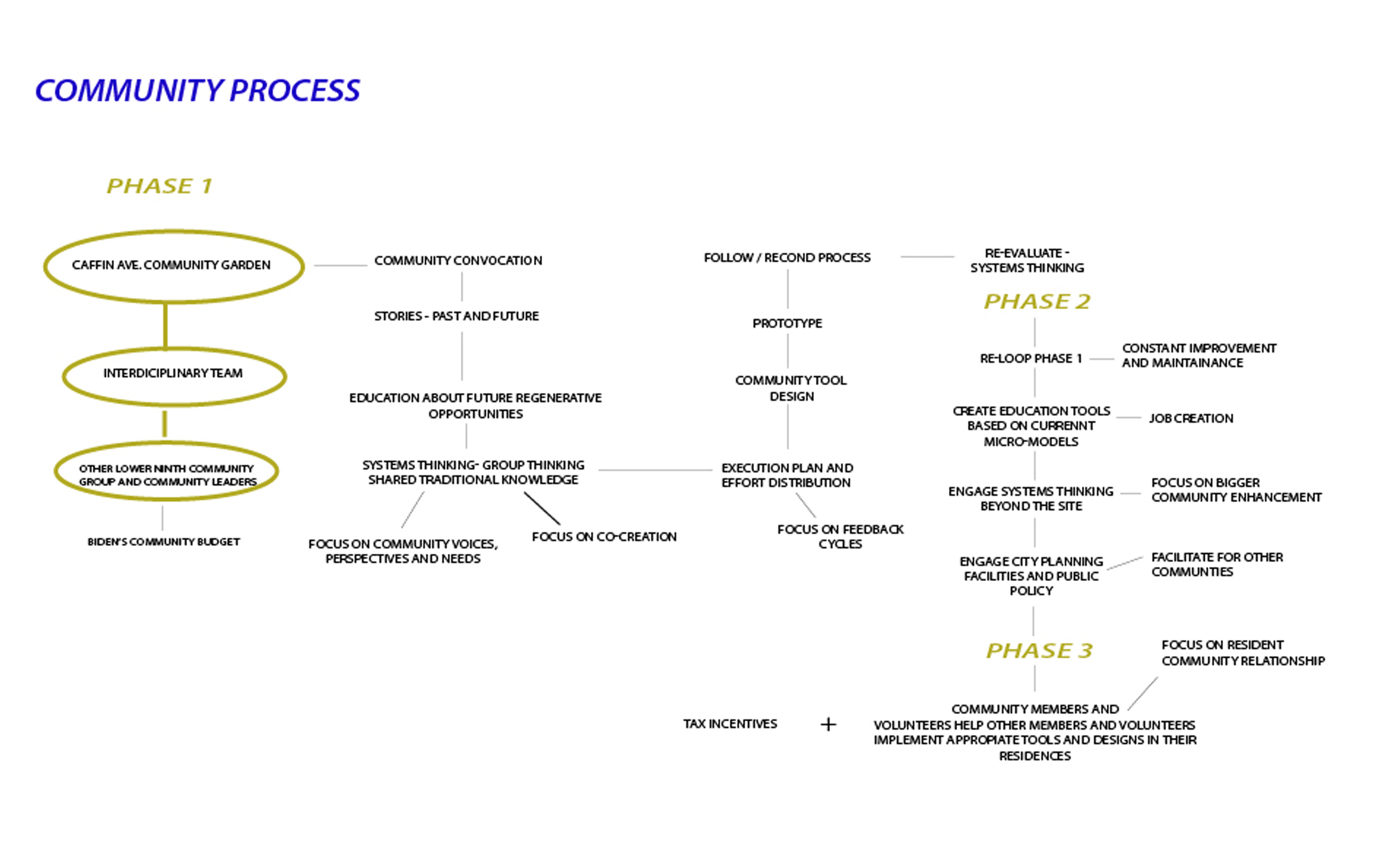
Human processes planning is essential for a bottom-up approach like this. Ideally, Caffin Avenue Garden, an interdisciplinary team, and other Lower Ninth community groups and leaders convocate the community to share their stories about themselves and their neighbourhood and what improvement looks for them to align goals further. Then, begin meetings focused on community integration and co-creation to develop more holistic systems that include multiple perspectives. We would start to plan the execution of those systems and effort distribution among the community, all this with an emphasis on cyclical patterns. After that, we develop design tools, prototype, follow the process, re-evaluate, and re-loop as necessary. Once these efforts are replicable, a similar approach to Phase One would begin. The second phase focuses on improving and maintaining effective systems, creating educational tools, job creation, and engaging a larger community beyond the chosen four sites, including city planning facilities and public policy. If possible, the community would facilitate this process for themselves, other communities, and larger entities. Lastly, the third phase will be about the continuation of the community helping each other, and other residents implement appropriate learned tools in their residences, enhance community relationships, and create more tools and education to get land stewardship tax incentives.
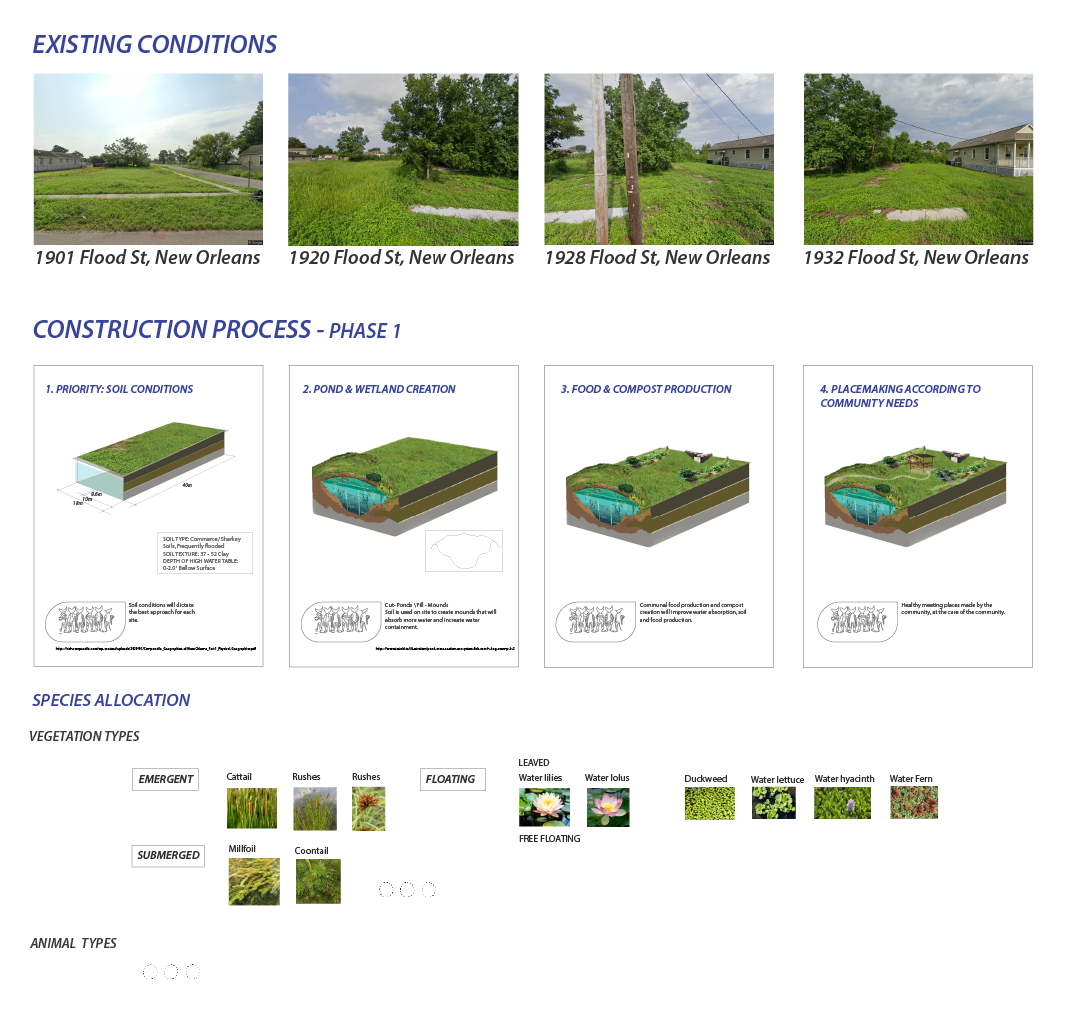
The timing of natural regeneration and community processes is unpredictable, so I decided to start with phase one implementation guidelines. Ideally, regeneration practices begin with a deep understanding of soil conditions, water tables, temperature, humidity, etc. Fundamentally soil conditions will dictate the best approach for each lot. The goal is to create natural structures that will provide water containment, and filtration in the same way swaps do. Hence, I decided to focus on pond and wetland creation and mound creation with the soil cut and fill around these structures to use that soil on-site and increase water absorption. A key factor about these third spaces is that since NOLA soil is so fertile. The lower ninth community remains disconnected. Food production would positively affect the community and compost production since it is a great way to deal with our residue. It improves the gardening process and fundamentally creates new land that can be added on-site layer by layer in the same way swamp sedimentation enhances soil structure. The community stewards these third spaces, so placemaking based on community needs is essential to strengthening the community and the natural systems. Lastly, phase one implementation success lies in species allocation. It is fundamental to the project.